Here is the question that ends a lot of conversations in church hallways. If I can forgive someone who hurt me without needing a payment, why couldn't God? Why did a death have to happen first?
Nobody asks that to be difficult. They ask it because the answer they were given made God sound worse than they are.
It is a fair question, and it deserves a real answer. Not a shrug about mystery. Not "his ways are higher." An actual answer.
The answer you were probably given
Most people who grew up around church absorbed a courtroom. God made a rule. We broke it. The penalty is death. God's justice has to be satisfied, so somebody has to die. Jesus volunteers.
Follow that out and you get a strange picture. The Father requires blood. The Son supplies it. And you are told to call this love.
If that is the story, your question answers itself. You would not forgive that way. No decent parent would.
So the problem is not your hard heart. The problem is the courtroom.
Why the courtroom is not in the book
The word "satisfaction" does not appear anywhere in scripture as a description of the cross. Neither does "penalty paid." Those are legal ideas added centuries later, by men thinking in the language of debts and lords.
What the Bible actually says is different. It says God was in Christ, reconciling the world to himself. Note who is doing the work in that sentence. Not a judge demanding payment. A father doing the reconciling, at his own cost.
It says God does not delight in the blood of bulls and lambs. It says mercy is what he wants. It says he is not a man that he should change his mind about you.
Read those together and the courtroom falls apart. A God who takes no pleasure in blood did not invent a system that requires it.
What forgiveness actually costs
Here is the part the courtroom gets wrong about forgiveness itself. Forgiveness is never free. It is free to the person receiving it. It is expensive to the one giving it.
If someone damages you and you forgive, you absorb the cost. You carry what they should have carried. That is what forgiveness is.
So the cross is not a payment extracted by an angry God. It is a picture of what forgiveness has always cost the forgiver. God did not need to be talked into it. God did the absorbing.
Now your original question works. God could just forgive. And the cross shows you what "just forgive" actually looked like from the inside.
Where the death happened
There is one more turn, and it is the one that changes how you read the whole thing.
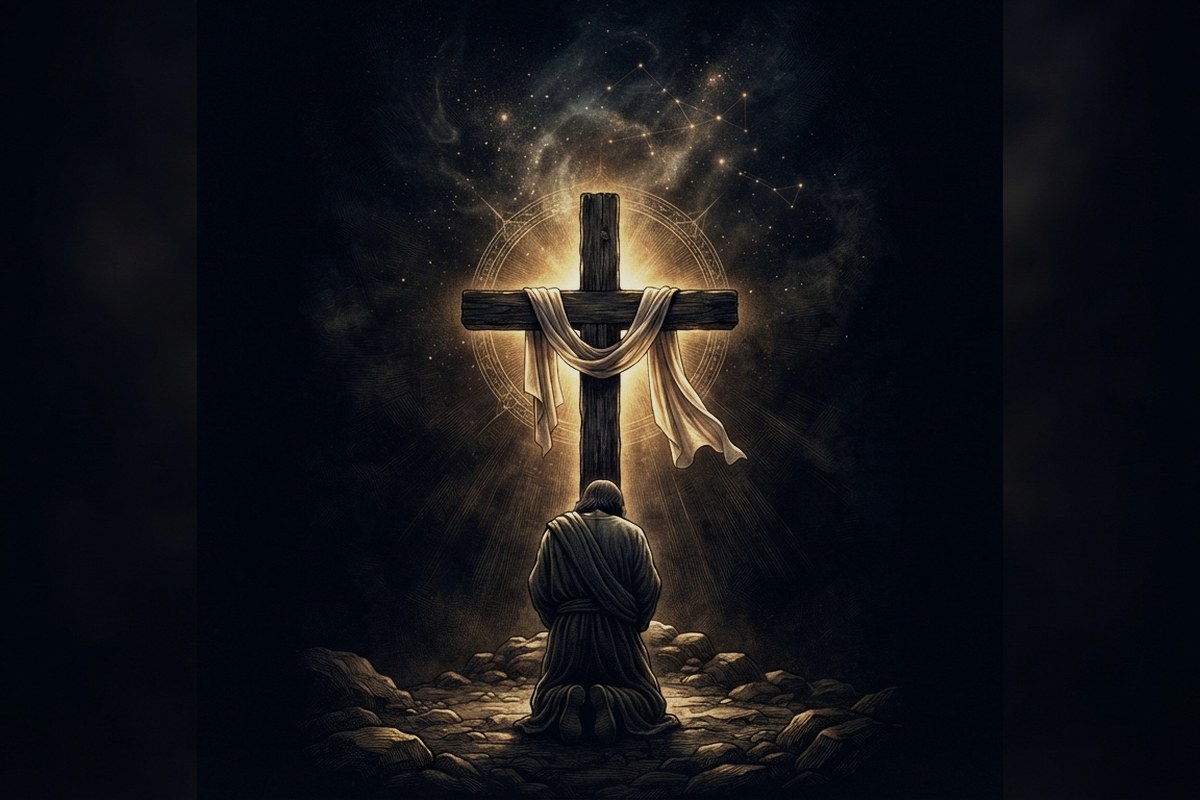
The cross is not an event on a hill two thousand years ago. It is a picture of what happens in a person. Golgotha means "the place of the skull." Not a location on a map. The inside of your own head.
The old self has to die for the new one to live. That is not a transaction between God and Jesus. It is the pattern of every real change that has ever happened inside a human being.
Which means the question "why did God kill Jesus" was never quite the right shape. Nobody killed the thing that needed to die in you. You let it die. That is the forgiveness, and it was always going to cost something.
What to do with the old answer
If you were taught that God needed blood before he could love you, you are allowed to set that down. You are not rejecting the Bible. You are rejecting a courtroom that was built on top of it.
The God you were afraid of was never there. There was no debt collector. There was a way of thinking that had to die so a truer one could live, and you were always the one holding the knife.
You can forgive your own worst thinking. That is what the story is for.
Want to decode passages like this without getting lost?
Get the free quick-start guide: 10 Core Bible Symbols Decoded in Plain English — plus a 2-minute way to use any symbol on a hard day.
Instant PDF, plus a short weekly note. Unsubscribe any time.✦ This is only the surface ✦
Every word of the Bible carries a hidden meaning — and there is far deeper teaching in the Parallels, the full study library.
Enter the Member Library Join on Telegram